



Project Information
| Company Name | GDRFA |
| Project Name | Dubai Future foundation DCAI (DCAI Acceleration Program) |
| Industry | Public | Data Format | JSON, Email file, TEXT |
| Integration | Outlook, JIra, Internal DB | Cloud | Azure |
| LLM | Llama 4 | Solution Version | CXP Agent, CXP Hub |
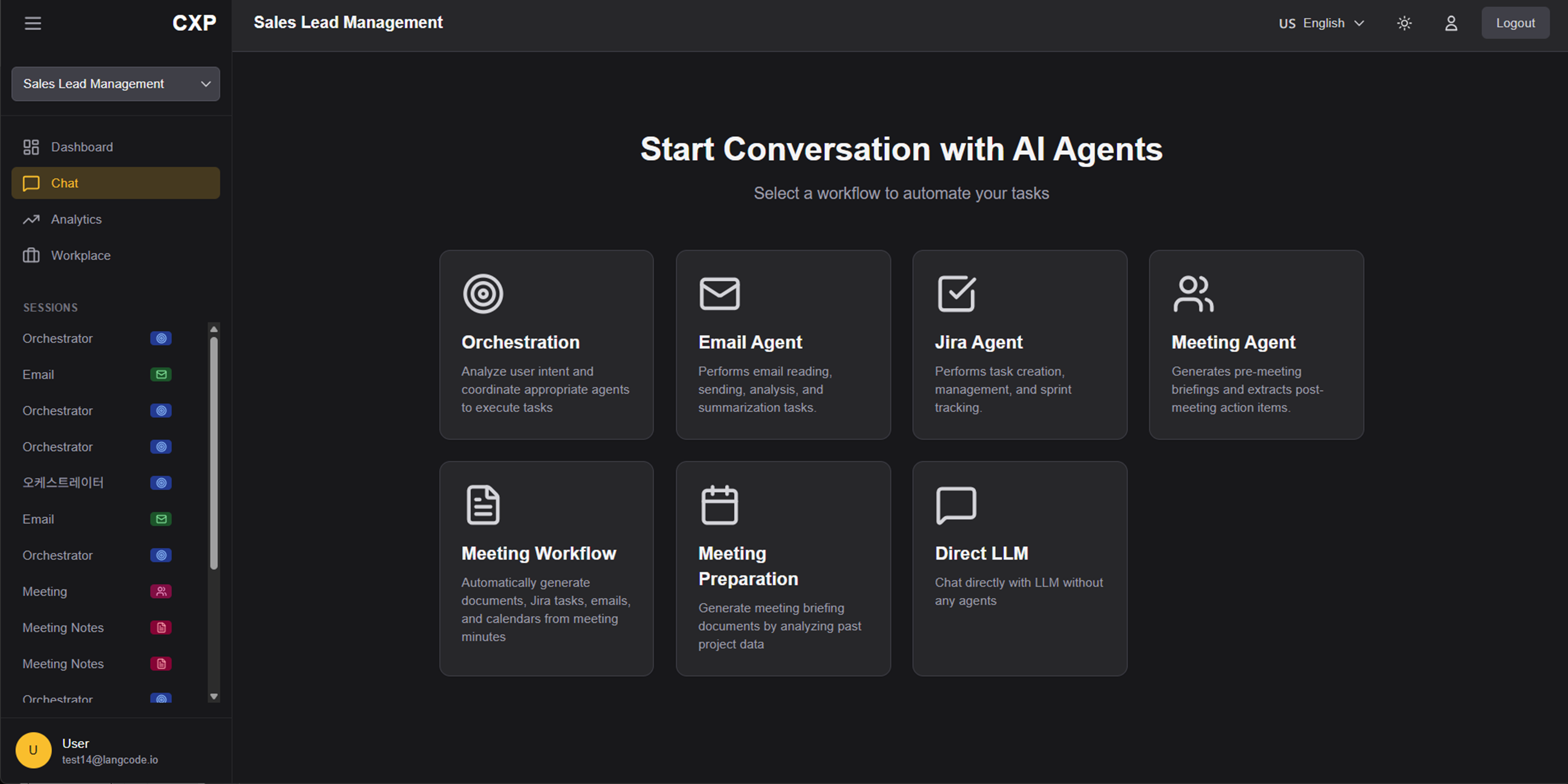
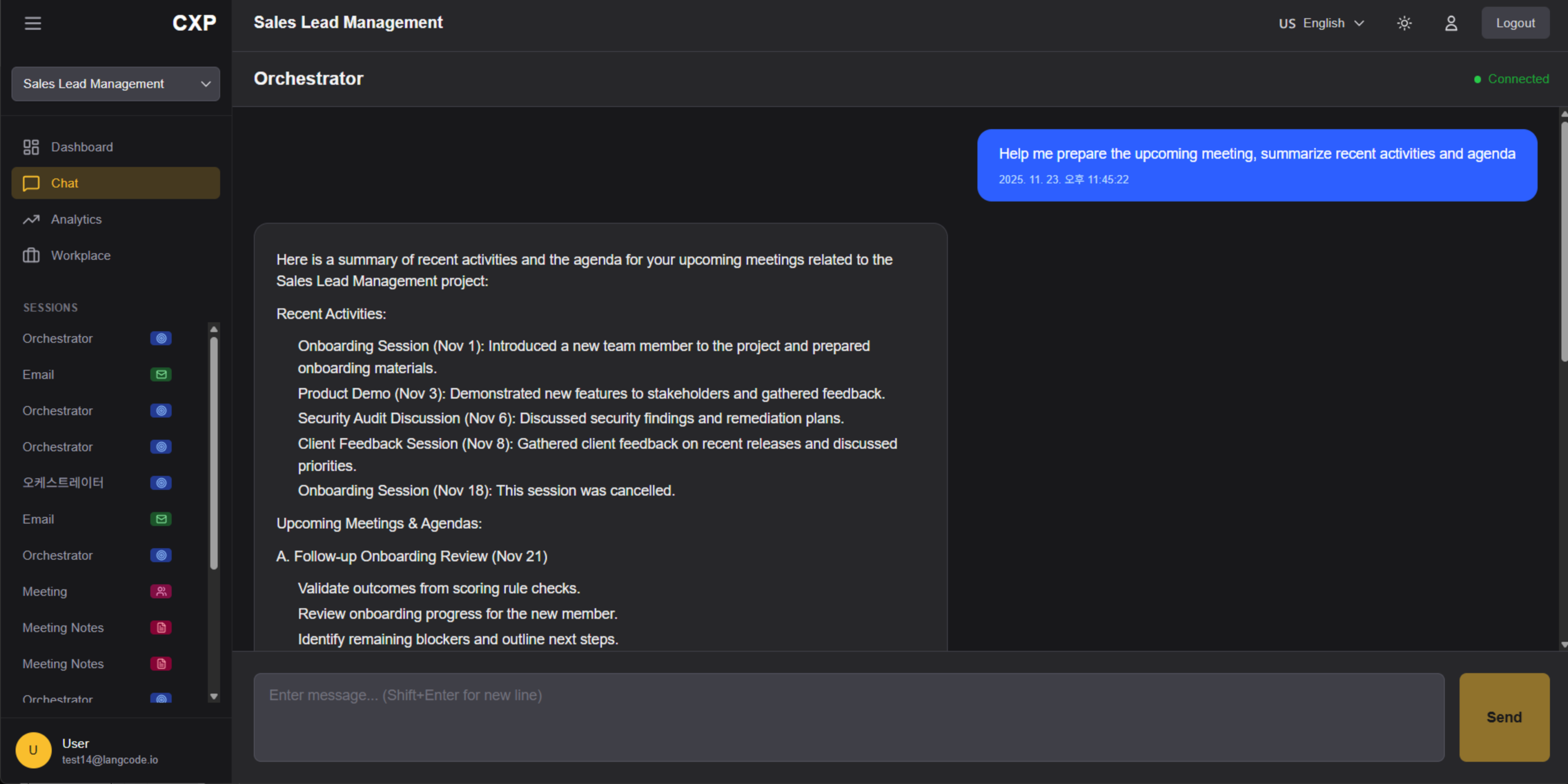
Multi-Agent AI System for Automating Internal Operations at GDRFA (Dubai Government)
A government-grade AI service that integrates fragmented, repetitive tasks—such as emails, meetings, documentation, and data analysis—into a single AI interface, validated across both cloud and on-premise environments.
Challenge
The General Directorate of Residency and Foreigners Affairs (GDRFA) in Dubai sought to go beyond basic automation and introduce AI that could deliver tangible productivity gains within a highly secure and complex government environment. However, several structural constraints made enterprise AI adoption particularly challenging.
Government-Level Security & Infrastructure Constraints
Fragmented Workflows Across Multiple Systems
Complex AI Requirements Beyond Simple Chatbots
Solution
We developed a multi-agent orchestration architecture where specialized agents collaborate to handle complex workflows, with simultaneous validation across both cloud and on-premise environments.
Dual-Track PoC: Cloud & On-Premise
Multi-Agent Orchestration Architecture
Structured AI Tool Packages (Group A/B/C)
Impact
Automation of Fragmented, Repetitive Tasks
Meeting Government-Grade Security & Governance Standards
How We Work
Parallel Validation Across Dual Environments
We analyzed constraints across both cloud and on-premise environments, designing a unified architecture that could be validated simultaneously through a dual-track PoC
Role-Based Agent Design
We defined specialized Sub-Agents for each task domain (email, Jira, meetings, documents), with a Master Agent orchestrating decomposition, delegation, and aggregation of user requests
Security-First Architecture
From the outset, we embedded government-grade data governance requirements into the system design, including least-privilege principles, role-based access control, and real-time monitoring