



Intro
The past year has undeniably been the year of Generative AI(GenAI), marked by its rapid development and widespread adoption. This remarkable growth of generative AI has empowered many companies to launch various pilot projects, using this technology to innovatively solve business problems and explore new opportunities. In our previously published insight, “Piloting Success: Key Strategies for Generative AI Project Implementation”, we outlined strategic approaches and key elements for successfully executing generative AI pilot projects. Expanding on that scope, this insight aims to guide how to more effectively integrate generative AI into the core operations and strategies of business.
Explore best practices for scaling GenAI
According to the 2024 Deloitte® State of Generative AI in the Enterprise report, Organizations are exploring how generative AI can be used to unlock business value, supercharge efficiency and productivity, and open the door to entirely new products, services and business models. As business leaders contend with this new technology and make decisions about the future of the enterprise with generative AI, it is helpful to keep one’s finger on the pulse of adoption [1].
Similarly, according to the 2023 Gartner® 10 Best Practices for Scaling Generative AI Across the Enterprise, “Given its strategic importance to the business, formulating best practices for scaling GenAI is crucial for gaining stakeholder confidence, enabling innovation across the organization, and building sustainable and adaptable AI strategies that can meet future needs.”
The 10 best practices to scale generative AI are detailed below and summarized in Figure 1.
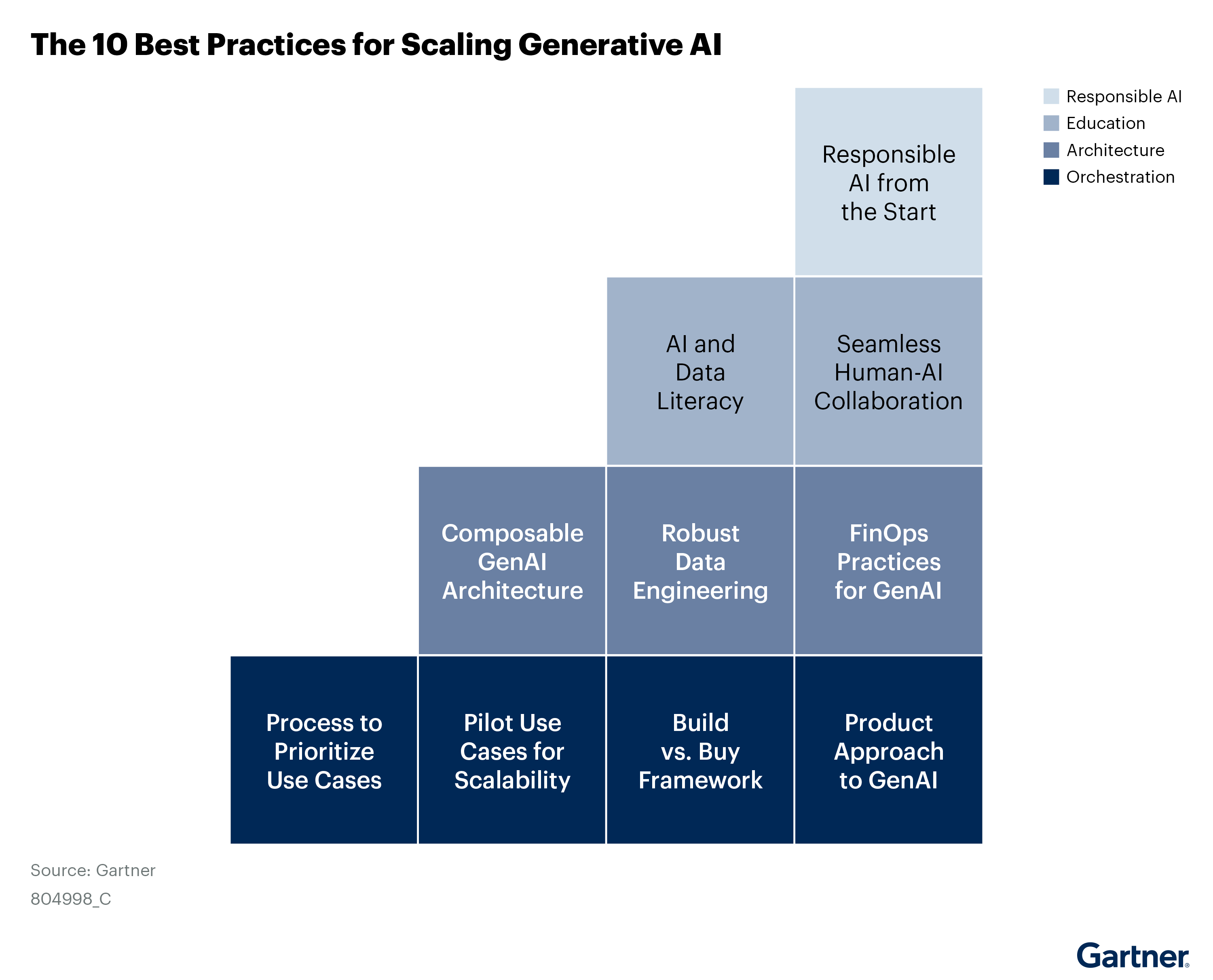
Figure 1. The 10 Best Practices for Scaling Generative AI
Establish a Continuous Process to Prioritize Use Cases
“The first step in the GenAI journey is to determine the AI ambition for the organization and conduct an exploratory dialogue on the art of the possible, The next step is to solicit potential use cases that can be piloted with GenAI technologies. Prioritizing GenAI use cases is a strategic imperative for organizations. Such prioritization should not be driven solely by the appeal of technology, or the “flashiest demo,” but by a holistic assessment of its value proposition to the organization. Above all things, the key is to identify use cases that deliver tangible business value and are the most feasible, and avoid those that could lead to growing risks and costs when scaled in production.
Importantly, the task of prioritizing should be a collective decision, involving not only the IT and technology teams but also the business lines that will utilize the GenAI application:
Create a Decision Framework for Build Versus Buy
“GenAI initiatives need to scale from a few users to thousands and eventually should be deployed across the enterprise. Scaling GenAI requires a systematic approach to build versus buy decisions for the many potential use cases in the organization. This upfront decision will have a lasting impact and must be thought through carefully for each use case.
Ideally, you want to build when the AI product can give you a competitive differentiation in your industry and when you have adequate skills and know-how for the build process. In the context of GenAI, use cases where you want to minimize risks for regulatory or brand equity reasons may also warrant a build approach. However, for most core business functions (such as HR, supply chain, marketing, sales and IT) — either a GenAI embedded application vendor or a GenAI native solution might be a more feasible approach.
There are a variety of approaches to steer and customize GenAI models — such as in-context learning, retrieval augmented generation (RAG) or fine-tuning. In addition:
Pilot Use Cases for Scalability
Run pilots to try new ideas, build muscle memory within the organization on the art of the possible and learn by experimentation. GenAI models are pretrained by model providers, which can result in tangible value in a short timespan, if executed well. However, ensure that pilots are built with scalability in mind by envisioning future data, privacy, security and usability needs.
To ensure the success of your pilot projects, obtain executive sponsorship, set the right expectations of project outcomes, focus on business value early on and reduce technical debt ahead of the pilot:
Design a Composable Generative AI Platform Architecture
“The GenAI landscape consists of four critical layers — infrastructure, models, AI engineering tools and applications. Ensure that your platform architecture is composable, scalable and embedded with governance upfront.
Understand the pros and cons of an end-to-end platform from a single vendor versus a disaggregated stack of best-of-breed components. The former provides quick time to value and better integration between tools but raises the exit costs via lock-in and enhances supplier dependency risk.
To ensure a flexible and composable architecture:
Put Responsible AI at the Forefront of Your Generative AI Efforts
GenAI creates not only new opportunities, but also new risks. Responsible AI is an umbrella term for all the different aspects of making appropriate business and ethical choices when adopting AI. This topic is a critical lens to make many early decisions in the GenAI journey from the use cases that will be prioritized, to the acceptable use of GenAI by employees, to the way in which GenAI will be broadly governed. Without a clear responsible AI framework, organizations will struggle to balance the benefits and risks of this technology.
When creating a responsible AI framework:
Invest in Data and AI Literacy
Unlike traditional AI, which often operates in the background and remains unseen by most of the workforce, GenAI is poised for active and direct use by a large segment of employees. This broad deployment requires a strong emphasis on AI literacy: the ability to utilize AI in context with competency to identify relevant use cases, as well as implement and operate corresponding AI applications.
This includes developing highly technical skills required to operate and customize these tools, and awareness and capabilities across the business to effectively use and integrate GenAI into business workflows. This transformation will require adopting change management best practices to successfully drive adoption at scale such as:
Instill Robust Data Engineering Practices
“A common misconception is that GenAI does not require high-quality data due to the massive pretraining of the models. In reality, organizations need to have an AI-ready data foundation to drive value — data that is curated, high-quality, accurate, enriched and well-governed.
GenAI models deliver the most value when combined with organizational data. This presents some new and unique requirements when it comes to data management, such as creating data pipelines for retrieval augmented generation, and utilizing tools like vector databases and knowledge graphs to help organize and find relevant data. CTOs should:
Enable Seamless Collaboration Among Humans and Machines
“Fostering collaboration among humans and machines is hard. Machines aren’t optimized for human workflows, and people’s mistrust in machines (AI) could impede our ability to work with them. The biggest performance improvements will accrue when humans and AI work together, enhancing each other’s strengths. Employees need to work with and train AI agents, explain their outputs, and make sure they are used responsibly. The primary purpose of using AI — which is to augment humans — needs to be clarified and reinforced. In addition:
Apply FinOps Practices to Generative AI
“Adopting GenAI at scale can be costly. FinOps, which is particularly gaining popularity in cloud computing, is a set of financial management practices that help organizations realize more value from their technology investments. A sound FinOps practice applied to GenAI will need to have visibility into GenAI costs, formulate strategies to optimize it and employ techniques to actively manage and reduce the costs.
Ensure you clearly understand the pricing model of GenAI vendors well. Most application vendors charge on a per user basis; they may subsidize or even offer these for free, but it may not stay free or at a low cost forever. When you fine-tune or use commercial AI models, you pay per token or batch of tokens used, which can lead to a significant operational expenditure, if ungoverned.
To control costs:
Adopt a Product Approach for Generative AI
“The product-centric delivery model, where timelines are ongoing and designed to continuously enhance customer value until the service or product is phased out, is critical for GenAI applications. This is mainly due to the rapid evolution of the market characterized by the swift introduction of new models and innovative data science/engineering techniques.
Furthermore, the swift uptake of GenAI applications by both consumers and enterprises is driving a rapid evolution in end-user demands: they now expect nothing less than optimal user experiences from existing GenAI applications. This dynamic environment demands an agile delivery model that can respond to shifting market innovations, underscoring the relevance of the product-centric approach in developing, deploying and maintaining GenAI applications.
As the usage of GenAI expands:
Success Story: NH Bank (Finance)
Among them, Gartner's recommended "Composable Generative AI Platform Architecture Design" provides a robust foundation for companies to efficiently utilize and expand generative AI. This architecture, consisting of four key layers—models, AI engineering tools, infrastructure, and applications—allows organizations to flexibly respond to rapid technological changes. LangCode CXP ensures flexibility in selecting various LLM models, enhances the scalability of bots for task-specific responses, and implements thorough measures for personal data protection at multiple stages. Through this, NHBank has been able to effectively monitor and manage various issues in the complex financial environment, providing customized services to customers and securing a competitive edge in the financial services sector.
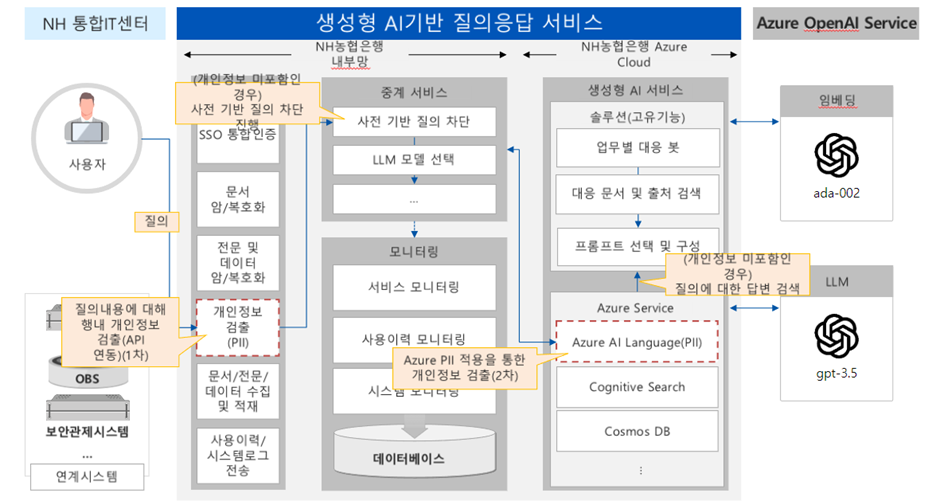
Figure 2. NHBank-generated AI-based Q&A service flow chart
As shown in the figure, the security control system provided by LangCode's CXP to NH Integrated IT Center focuses on monitoring, auditing, and managing various issues that can arise in the complex financial environment. By utilizing CXP, NH Bank has maximized the efficiency of organizational operations across IT, development, and finance through dashboard-based input/output token usage and utilization statistics management, and has achieved great success in building and optimizing an AI-based knowledge base using the CXP solution AI engine. This AI engine automated the chunking, embedding optimization, and indexing of knowledge base information using the RAG pipeline, enabling the construction of a system that can respond more accurately and promptly to user queries. Document source exploration, prompt configuration, and seamless integration with the Azure OpenAI API act as key elements in enhancing user experience, enabling NH Bank to provide customized services tailored to the diverse needs of customers. This technological advancement has enabled NH Bank to further secure its competitive edge in the financial services sector and play a decisive role in leading the transition of business models through digital innovation.
Outro
We have witnessed the innovative changes brought to the business environment by the integration of generative AI technology. This technology has shown the potential to fundamentally change the way companies discover new opportunities and solve business problems. Through various recommended practices by Gartner and success story in the finance sector with Langcode CXP, it has been confirmed that generative AI can play a powerful role as a tool for business innovation. However, for the successful integration of such technology, a more systematic and efficient approach through professional vendor solutions is necessary.
The steps towards business innovation with generative AI go beyond simply introducing new technology; they include integrating it closely with corporate strategy and establishing concrete plans for sustainable development. In this process, companies must explore ways to innovate their business models, improve customer service, and increase operational efficiency using generative AI technology. Additionally, preparation for ethical and legal considerations that emerge with the advancement of AI technology is essential.
At Langcode, we are currently supporting companies in successfully leading business innovation and securing a competitive advantage through GenAI with our enterprise-grade conversational platform, CXP. We plan to share various customer use cases and success stories in the future, so please stay tuned! Thank you.
To read more Gartner recommendations on 10 Best Practices for Scaling Generative AI Across the Enterprise, click here.
GARTNER is a registered trademark and service mark of Gartner, Inc. and/or its affiliates in the U.S. and internationally and is used herein with permission. All rights reserved.
This graphic was published by Gartner, Inc. as part of a larger research document and should be evaluated in the context of the entire document. The Gartner document is available upon request from Langcode.
[1] Deloitte, Deloitte’s State of Generative AI in the Enterprise Quarter one report, January 2024
[2] Gartner, 10 Best Practices for Scaling Generative AI Across the Enterprise, By Arun Chandrasekaran, Leinar Ramos, Alberto Pietrobon, 10 January 2024