



Intro
ESG (Environmental, Social, and Governance) management has become an essential element in modern business operations. ESG, which encompasses environmental, social, and governance aspects, emphasizes corporate sustainability and social responsibility. It has established itself not only as a crucial evaluation criterion for both investors and consumers but also as a significant measure determining companies' long-term survival and growth. In fact, as of 2021, the market value of global ESG assets exceeded $18.4 trillion, with an expected annual growth rate of 12.9% until 2026.
Meanwhile, the explosive growth of generative AI, represented by ChatGPT, has brought revolutionary changes to the business environment. From simple repetitive tasks to knowledge-based work requiring high expertise, AI is dramatically transforming our way of working. However, there is also a shadow behind this innovation. The massive amount of electricity and water consumed during AI model training and inference leads to significant carbon emissions. For example, GPT-4, a relatively recent model, used approximately 60,000 MWh of electricity during its training process, which is calculated to result in about 1,200 tons of carbon dioxide emissions.
These environmental concerns have not only increased critical views on generative AI but paradoxically have also highlighted the importance of ESG management. Along with voices concerned about AI's resource consumption from an environmental protection perspective, discussions about ethical AI usage are actively taking place on the social front, including personal data protection and biased responses from generative AI.
So, are generative AI and ESG mutually exclusive? Are innovative technological advancement and a sustainable future truly conflicting values? Let's now examine opinions on these questions.
Positive Impact of AI on Each Aspect of ESG
Generative AI is driving positive changes in each area of ESG.
First, from an Environmental perspective, generative AI is contributing to environmental protection and sustainability improvement. According to the International Energy Agency (IEA), while data centers currently account for about 1% of global electricity consumption, generative AI can help find solutions to these energy consumption issues. For example, AI is being used to improve energy efficiency in various areas, from selecting optimal locations for renewable energy plants to predictive maintenance of wind turbines. Particularly, according to World Bank projections, AI-powered mini-grid management could provide sustainable electricity to 380 million people in Africa alone by 2030.
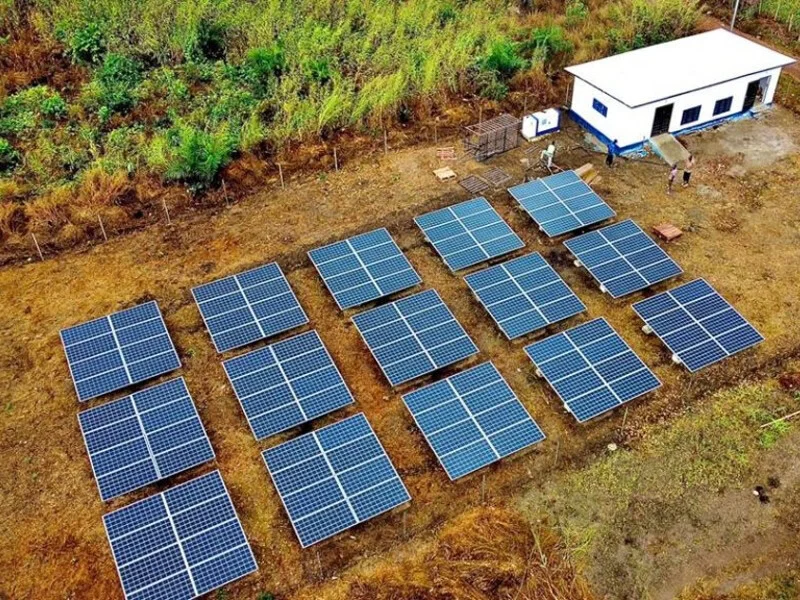
Battery Bank Africa
From a Social perspective, generative AI is contributing to improved educational accessibility and work environments. AI-based personalized learning systems help reduce educational gaps by providing education tailored to individual learning paces and styles. Generative AI can also contribute to building an inclusive and fair society. AI translation technology breaks down language and cultural barriers to facilitate global communication, while medical AI establishes a foundation for providing quality healthcare services to marginalized communities.
Generative AI is also effective in improving corporate governance and increasing transparency. In particular, it can be used to identify potential risks in advance by analyzing large datasets and support ethical decision-making. For example, AI helps companies maintain responsible management by detecting and reporting ethical issues in supply chains in real-time. According to the World Economic Forum report, AI can efficiently meet regulatory requirements by automating corporate risk management and legal compliance.
Langcode CXP and ESG
Langcode's CXP (Conversational eXperience Platform), a service based on generative AI technology, provides industry-specific solutions and can have the following positive impacts in each ESG area.

Adobe Stock - Cloud & ESG
First, in terms of Environmental aspects, CXP offers various features for environmental protection and sustainability realization. In particular, its operation based on Microsoft Azure cloud actively participates in Azure's sustainability policies, adding environmental value. Azure aims to use 100% renewable energy by 2025 and achieve water-positive goals and zero-waste by 2030. Through this, CXP can minimize the carbon footprint that may occur during AI service provision and have a positive environmental impact.
Additionally, Langcode's CXP adopts an Advanced RAG structure, significantly reducing excessive computation and energy consumption during model fine-tuning. The RAG approach is a method to increase the environmental sustainability of AI utilization as it can achieve better results with less power consumption. Furthermore, through intelligent LLM selection according to user budgets, it efficiently manages computing resources required for AI model operation. This ultimately results in reduced energy consumption.
From a Social perspective, CXP realizes AI democratization while ensuring user protection. It ensures accessibility for diverse user groups by providing STT-TTS functionality as a standard feature and optimizes user experience through personalized interfaces. Data security is supported through a triple protection system for personal information protection and related monitoring. It also meets enterprise-level security conditions. Successful implementation cases across various industries, including Samsung Heavy Industries, Mercedes-Benz, KT, and Seven-Eleven, demonstrate that CXP can have positive social impacts across industries.

CXP Customizable RBAC
In terms of Governance, CXP features characteristics that strengthen transparency and accountability. It actively addresses the black box problem of generative AI by providing a decision-making pipeline that allows real-time verification of AI decision-making processes, and these processes are managed through monitoring logs. Furthermore, systematic authority management is possible through an RBAC system segmented by position and department, which fundamentally blocks unauthorized access to sensitive data. Lastly, it establishes a governance system that meets global standards by complying with international regulations and compliance requirements such as GDPR and AI Act.
Conclusion
While the emergence of generative AI certainly presents challenges in terms of environmental burden, this has become a reason for us to develop technology more wisely and responsibly. In the short term, there are genuine concerns about energy consumption and carbon emissions from AI model training and operation. However, from a long-term perspective, generative AI can contribute to creating a sustainable future by providing innovative solutions in each area of ESG management.
Langcode CXP continues to strive for environmentally friendly technology implementation, fulfillment of social responsibility, and establishment of transparent governance in response to these contemporary demands. Moving forward, Langcode will continue to realize ESG values through CXP while further improving service quality and efficiency. This goes beyond simply minimizing environmental impact; it is based on the belief that technology can bring positive changes to our society and environment. Generative AI and ESG are not conflicting values but rather two pillars that will develop together towards a better future.