



With 2023 behind us, 2024 is just around the corner. Over the past year, we've experienced an unprecedented wave of technological change and innovation. 2023 witnessed a number of turbulent changes, most notably the rapid advancement of generative AI, the setting of new standards for sustainable technology, and a paradigm shift in digital security. These changes are redefining the way we look at technology and have us even more excited for the technology trends and business opportunities that will unfold in 2024.
Looking ahead to 2024, Gartner® has identified a number of noteworthy tech trends to watch, and in this Insight, we'll dive deep into the Gartner's predictions for GenAI in 2024 to prepare you for the year ahead, as well as the impact GenAI will have on our daily lives and the business world.
2024 Opportunities with GenAI
According to the 2023 Gartner® Top Strategic Technology Trends for 2024: Democratized Generative AI, “The democratization of generative AI (GenAI) opens up immense opportunities, such as:
Top Strategic Technology Trends for 2024: Democratized Generative AI by Gartner
Now, we're going to take a look at one of the Gartner Top Strategic Technology Trends for 2024: Democratized Generative AI. According to Gartner, “GenerativeAI (GenAI) will revolutionize the way businesses operate, ushering in a new era of productivity, efficiency and innovation. It will have a range of uses, from automating routine tasks to generating creative solutions for complex problems. GenAI has the potential to transform the nature of work, enabling businesses to drive growth and achieve success more quickly. As such, IT leaders must recognize the transformative power of GenAI and begin to embrace its potential, while simultaneously crafting policies to mitigate its risks.
The rapid adoption of GenAI will significantly democratize knowledge and skills in the enterprise. Large language models enable enterprises to connect their workers with knowledge in a conversational style with rich semantic understanding. Employees with access will benefit from this vast amount of knowledge, both internally and externally to the company.
In many organizations, digital transformation efforts have stalled because of the distant relationship between “the business” and “IT.” GenAI could enable a “low code and no code” approach to product development, simplifying product customization and creation by an increasing number of business technologists and citizen developers within the organization. Early-stage products, such as ChatGPT and GitHub CoPilot, show a glimpse of potential possibilities, allowing users to interact in natural language, and then have the AI tool generate and auto-complete that instruction with code.
While GenAI is democratizing skills and knowledge across workers, access to GenAI models and applications is also being democratized. The latter is the result of the confluence of two key forces — cloud computing and open source. A huge number of GenAI models, tools and applications are being made available as APIs in the public cloud. This has made it easier for developers to build applications using these APIs without having to build or operate their own models. Closed-source models have previously dominated the GenAI landscape, but a vibrant ecosystem is building around open-source models. Open-source models give enterprises more flexible deployment options, better control over security and privacy, and customization opportunities for steering these models to align with their use cases. Figure 1 illustrates the democratization of GenAI.” [2]
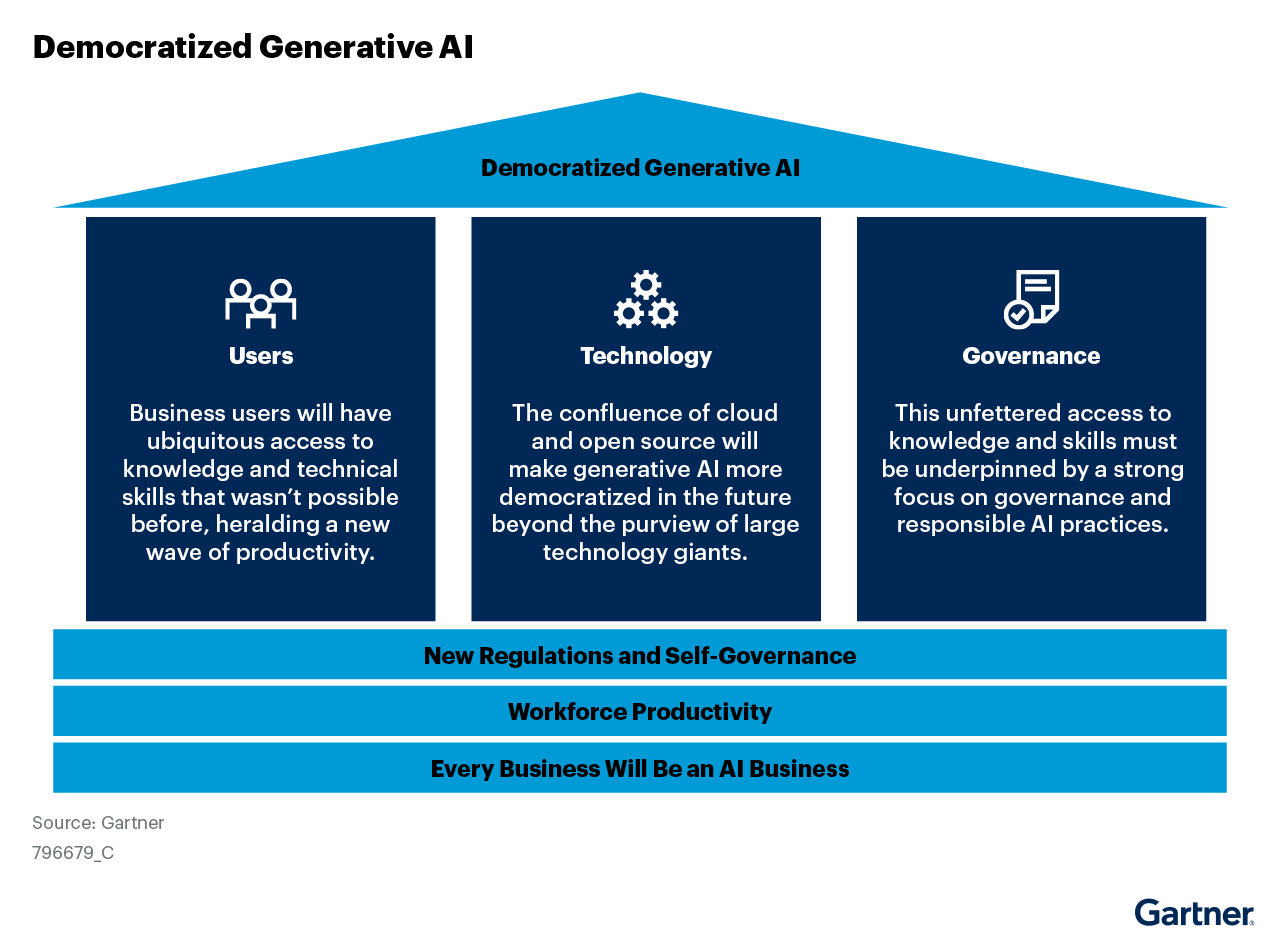
Figure 1: Democratized Generative AI
What is Democratized Generative AI?
As per the Gartner insight, “Generative AI is the ability of AI models to create completely original variations of content (including images, video, music, speech and text). GenAI applications (i.e., ChatGPT) have the potential to automate a broad range of tasks, thereby boosting productivity, reducing costs and offering new opportunities for growth. GenAI will democratize information and skills across a broad set of roles and business functions, making it one of the most disruptive trends of this decade.
The immense potential and viral adoption of ChatGPT has catapulted GenAI to become a top priority for IT leaders. A Gartner Webinar poll in April 2023 found that 19% of enterprise IT leaders were piloting GenAI or had already deployed it, while 70% were exploring its potential. Enterprises’ enthusiasm stems from the uniqueness of GenAI as a technology trend that can massively improve organizational efficiency (reduce costs), while also offering huge potential for revenue growth.
Democratization of Generative AI can bring the following benefits:
Organizations are investing heavily in GenAI. Large technology companies, including Microsoft (and OpenAI), Google, Meta, Amazon Web Services, Salesforce and IBM — and heavily funded start-ups, such as Cohere, Anthropic and Hugging Face — are making massive investments, seeking to democratize GenAI’s adoption.
Although GenAI models are a great technical advancement, they still require frequent human intervention to steer them. Gartner expects that more autonomous agents will evolve that can execute complex business tasks, but require limited prompting. This will be a huge driver of adoption beyond the technical teams that possess the know-how of prompt engineering.” [3]
Langcode CXP to Evolve with Generative AI in 2024
According to the 2023 McKinsey&Company® The economic potential of generative AI report, “Generative AI will add between $2.6 and $4.4 trillion in annual value to the global economy, increasing the economic impact of AI as a whole by 15 to 40%. The consultancy projects that AI will automate half of all work between 2040 and 2060, with generative AI pushing that window a decade earlier than previous estimates. Goldman Sachs predicts a 7%—or nearly $7 trillion—increase in global GDP attributable to generative AI, and the firm expects that two-thirds of U.S. occupations will be affected by AI-powered automation.” [4]
According to the MIT Technology Review Insights, “Generative AI and LLMs are democratizing access to artificial intelligence, finally sparking the beginnings of truly enterprise-wide AI. Powered by the potential of newly emerging use cases, AI is finally moving from pilot projects and “islands of excellence” to a generalized capability integrated into the fabric of organizational workflows. Technology teams no longer have to “sell” AI to business units; there is now significant “demand pull” from the enterprise.” [5]
Accenture stated “The journey for LLMs is only just beginning so there’s plenty more to discover than is explored here, but it’s clear that information discovery is moving from a search mode to a conversational mode, which is far more flexible, nuanced and personalized than its predecessors. [6] So what we are suggesting we think that by 2024 generative AI to move beyond simple search and become a content creation and task support assistant, bringing far-reaching change to multiple industries and use cases.
Here's a solution that's actually applying and realizing this change. Langcode’s CXP solution brings the future of AI technology to the business world today by delivering information tailored to business needs in the form of a variety of multimodal answers. It works with a variety of data programs, including Sharepoint (Onedrive) and PowerQuery, to aggregate and engineer information, then delivers it in the form of messages, cards, buttons, files, charts, curations, and more to match the user's intent and context. Users can easily access the information they need in a personalized, conversational way through an intuitive interface.
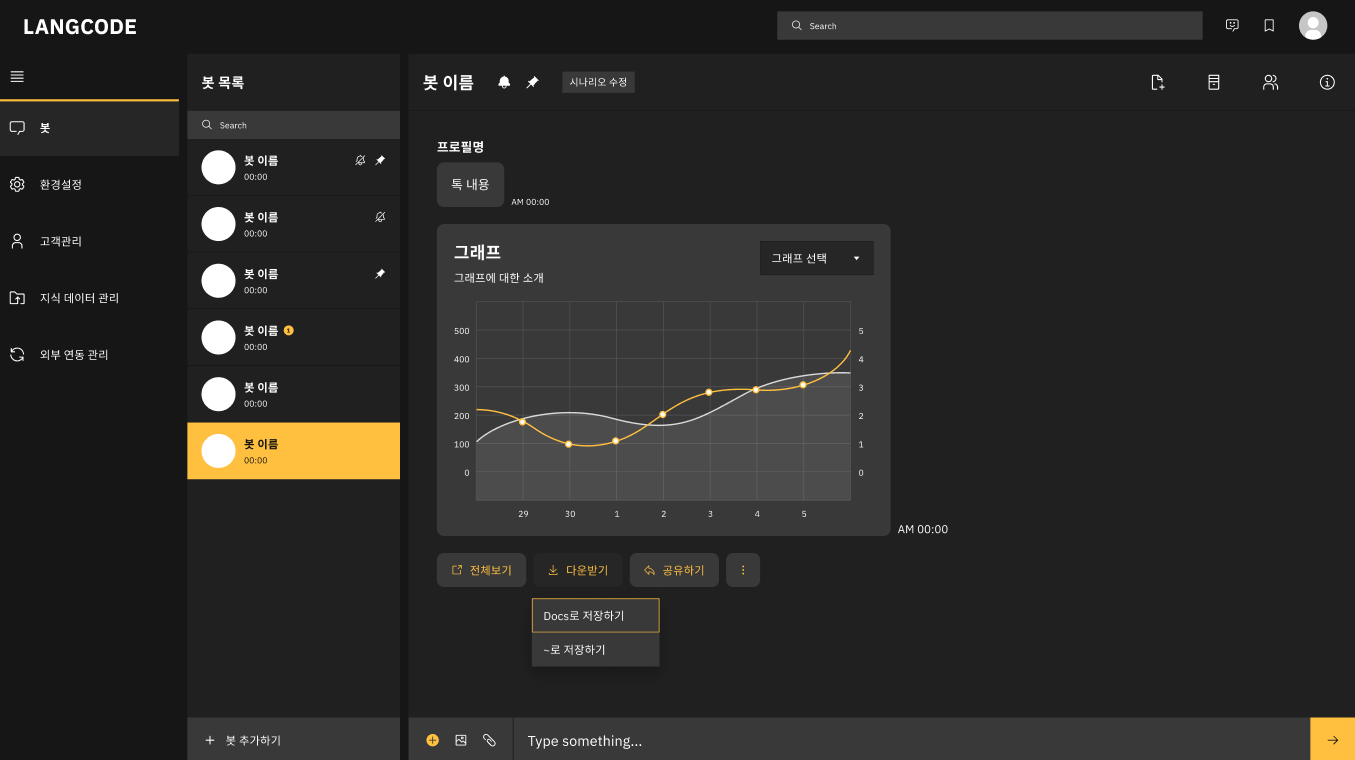
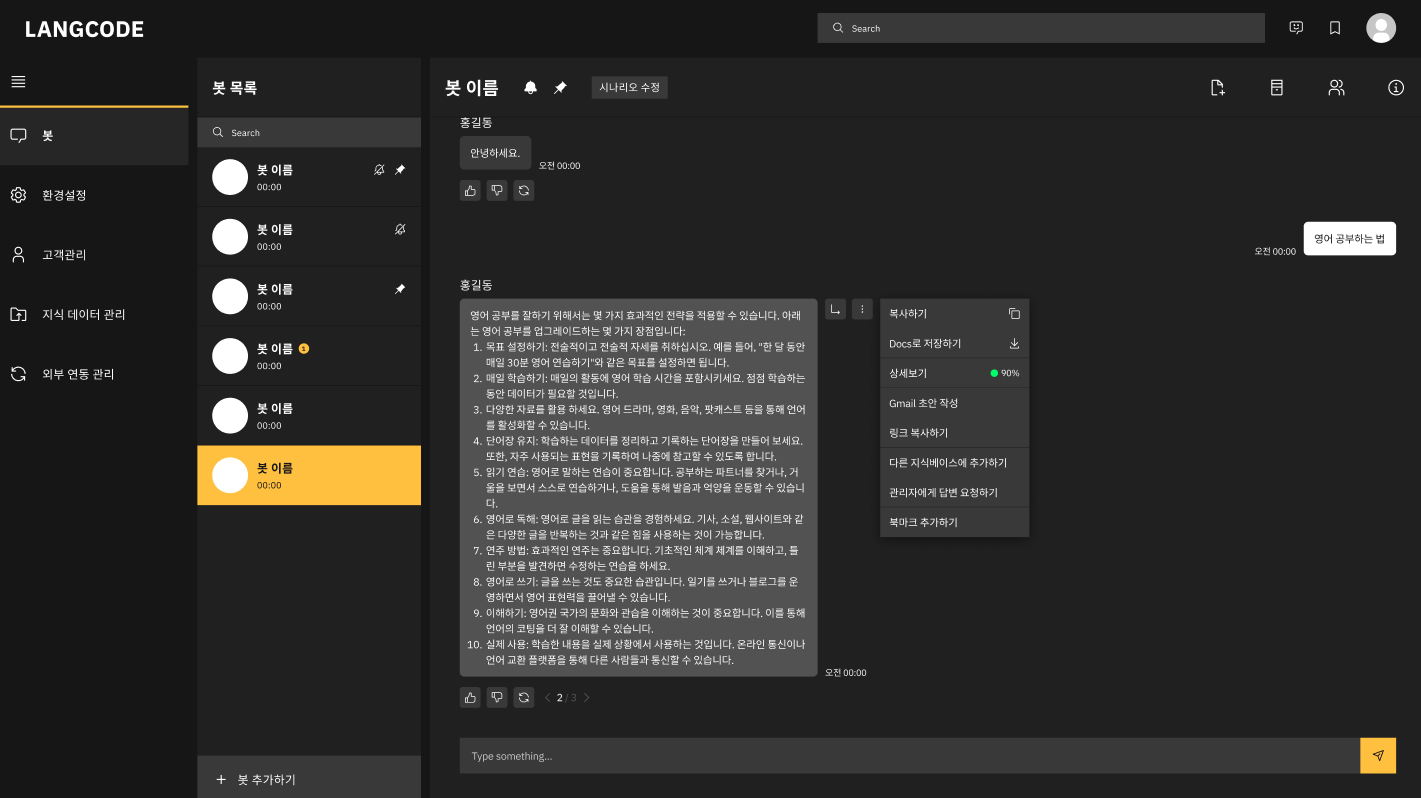
Figure 2: Langcode CXP
It automatically generates analytical data through natural language processing and document-based data extraction logic, and comes with automation features like chart export and mail drafting. This makes it easy for users to get the insights they need and fully utilize the outputs of generative AI. Here are some of the key features offered by Langcode CXP:
With its dynamic process/workflow and generative orchestration capabilities, Langcode CXP is leading the democratization of generative AI in the industry and is playing a key role in making organizations maximize their efficiency. For a deeper dive into the capabilities of Langcode CXP, follow this video link to see the CXP in action, and if you're interested in exploring the Gartner Top Strategic Technology Trends for 2024: Democratized Generative AI full research, click here to download the complimentary Gartner research until January 15, 2024.
Thank you for your continued interest and support of Langcode Insights in 2024, and we look forward to bringing you more informative and interesting topics in the new year😊.
To read more Gartner recommendations on Top Strategic Technology Trends for 2024: Democratized Generative AI, click here.
GARTNER is a registered trademark and service mark of Gartner, Inc. and/or its affiliates in the U.S. and internationally and is used herein with permission. All rights reserved. This graphic was published by Gartner, Inc. as part of a larger research document and should be evaluated in the context of the entire document. The Gartner document is available upon request from Langcode.
[5] Source: MIT Technology Review Insights, The great acceleration: CIO perspectives on generative AI, June 18, 2023