


Introduction
Recently, Langcode CXP has entered the final stages of preparing for its entry into the European market. With GDPR compliance checks and readiness for the AI Act nearing completion, CXP is poised to expand its presence in Europe. Business development activities conducted on-site in Europe from October to November have provided significant insights. Most notably, it has become clear that compliance with AI regulations is not merely a legal obligation but a critical key to market entry. Leading European companies are already actively forming partnerships with the AI Act in mind, and regulatory compliance capability has emerged as a core element of business competitiveness.
Reflecting on the changes brought about by GDPR in the data industry, this becomes even more apparent. Initially perceived as a regulatory burden, GDPR ultimately became the new global standard in the data industry. EU regulations acted not as constraints but as catalysts for setting new market norms. Following the adoption of GDPR, the European data protection technology market grew over threefold compared to 2018, demonstrating how regulations can create new business opportunities. The AI Act should be viewed in the same light.
Reference: Markets and Markets: “European Data Protection Market Growth Analysis” https://www.marketsandmarkets.com/Market-Reports/european-data-protection-market-978.html
A New Paradigm for AI Development
The AI industry is currently at a major turning point. Historically, AI development has operated under the paradigm of "fast launch and market validation," where products are swiftly introduced to the market and progressively improved based on user feedback. While this approach has driven rapid technological advancements, it has also amplified concerns over bias, safety, and transparency in AI systems.
The introduction of the EU AI Act is bringing about a fundamental shift in this paradigm. Under the new regulatory framework, pre-launch safety validation of AI systems has become mandatory. Systematic risk assessments and the establishment of continuous monitoring systems are now essential. Significantly, the societal and ethical impacts of AI systems have become central considerations. This shift represents more than just regulatory tightening; it signifies a transformation of the AI development paradigm toward "responsible innovation."
New Market Opportunities
These changes are creating new market opportunities. According to the Markets and Markets report "European AI Market Outlook 2023," the European AI quality assurance market is projected to grow to €5 billion by 2025. From algorithm audit services to quality certification and monitoring tools, various new markets are emerging. Demand for tools that diagnose bias and verify fairness in AI systems is surging, particularly in high-risk sectors such as finance, healthcare, and recruitment.
AI Governance Market Size & Trends
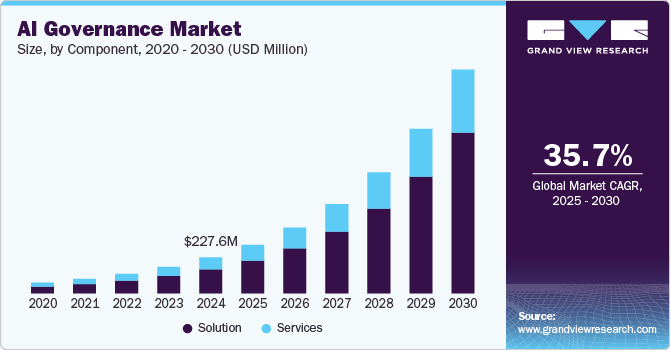
The AI governance solutions market is also noteworthy. Expected to grow to €3 billion by 2025, this market sees high demand for tools that trace and explain AI decision-making processes. For instance, a major Dutch bank invested €5 million to enhance the explainability of its AI-based loan evaluation system. This example underscores the value companies place on transparency and explainability in the AI Act era.
Market Entry Strategies
Seizing these market opportunities requires systematic preparation. Technologically, it is necessary to develop tools for AI system risk self-assessment, establish documentation and automated testing systems, and build a robust monitoring framework. Organizationally, companies must establish AI ethics committees, form regulatory compliance task forces, and build collaborative networks with local experts. Importantly, these efforts should be viewed not as mere costs but as long-term investments in competitiveness.
Collaborating with local enterprises can also be a critical strategy. For example, a mid-sized German company successfully introduced AI into its manufacturing processes by partnering with a local AI regulation consulting firm. This case demonstrates the importance of synergy between technological capability and regulatory compliance.
Taking a phased approach is prudent, starting with low-risk AI systems, obtaining necessary certifications, and building references before gradually expanding to high-risk AI systems. By combining South Korea's advanced technology with EU’s stringent regulatory compliance, companies can create a differentiated strategy with significant competitive advantages.
Langcode AI ACT Best Practices
| Category | Security Checklist | Langcode Implementation |
| Account Management | Are accounts created and managed according to user roles in the chatbot service? | Integrated authentication through SSO and organizational details such as departments |
| Access Control | Are policies for registering, changing, and deleting access control for chatbot-related files recorded and reviewed periodically? | Monitoring system linked to approval processes for access control |
| Input Restrictions | Does the chatbot service restrict user input to avoid including personal or sensitive information? | Input restriction through modules that detect and filter sensitive or confidential data |
| Data Security | Are appropriate protections (e.g., account/authorization management, access control, encryption) applied to critical chatbot-related information? | Implementation of robust encryption and automatic deletion for securing critical information |
| Remote Access Prohibition | Is remote access to chatbot management systems outside the internal network prohibited, with enhanced security controls in exceptional cases? | Prohibition of remote access via architecture configuration and strict security controls such as cloud DMZ |
| Personal Information Use | Are safeguards implemented and regularly reviewed when personal or sensitive information is used in chatbot services? | Real-time detection and monitoring to limit personal information usage |
| Cloud-based Chatbot Use | Is network access control enforced when using the same chatbot platform as external organizations? | Network access control, including blocking remote access to cloud-based development and operation environments |
Conclusion
The EU AI Act is undoubtedly a challenging undertaking. However, it also represents an opportunity for domestic companies to demonstrate both technical prowess and trustworthiness. Langcode aims to leverage this change as a springboard for new growth. Through systematic preparation and strategic approaches, we intend to transform the AI Act into an opportunity to strengthen our global competitiveness. Beyond mere regulatory compliance, Langcode strives to grow into a company that sets new standards in the global AI market.